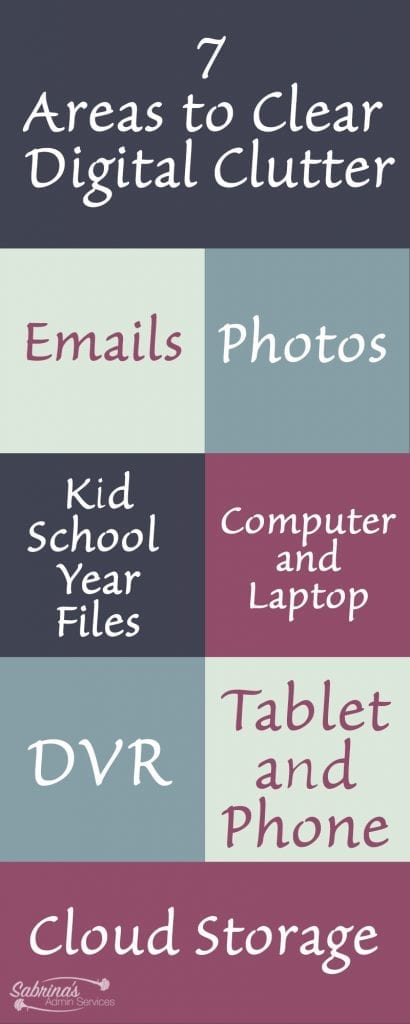
We all have digital clutter these days. It is saved everywhere: on your work computer, tablet, personal laptop, mobile device, external hard drives, cloud services, and even your DVR. We keep saving new things, and forgetting about them is common for many of us. But today, I will revisit all these areas you may have forgotten about and pinpoint what you can zero in on to declutter, saving you time going through that massive amount of files. Let’s begin.
** This post has been updated in 2026.***
Digital Areas to Declutter
Key Takeaways
- Digital clutter accumulates across multiple devices, affecting productivity and storage costs.
- Regularly declutter photos, emails, and unused apps to free up space and improve organization.
- Utilize AI tools for efficient file sorting and management, especially when handling large volumes.
- Schedule a decluttering session at least once a quarter to maintain control over digital clutter.
- Deleting old files and unused subscriptions can save you time and reduce ongoing storage expenses.
Here are steps to keep your digital clutter at bay:
Photos on your cloud storage
Nowadays, photos upload automatically. However, you can go into your photo library, review photos, and then delete them right in the app, and they will be automatically deleted in the cloud. Easy, right?
A quick way to remove photos is to do so when you have just taken several photos. Go through each of them, then select the photos with the following issues to delete.
- Blurry images
- Unflattering images
- Accidental Screenshot images
- Duplicate images or almost duplicate images
- Underexposed or overexposed images
- Photos of people or places you didn’t like
- Unknown people photos
- Any unneeded photos
Note: When you delete photos, Google and iOS keep them for 30 days before permanently deleting them.
These are just some of the photos that everyone may have in their cloud storage services, like Google Drive, OneDrive, and iCloud. I’m giving you permission to delete them now.
Instructions on how to delete photos in iOS: Delete photos on your iPhone or iPad
Instructions on how to delete photos in Google Photos: I couldn’t find an easy, detailed instruction, sorry.
Delete Kids’ school correspondences
Just because we are business owners doesn’t mean we didn’t keep all our kids’ school correspondence for this past year. I’m allowing you to eliminate all these emails and create or rename folders for the new year.
Digital folder names could be: (Kid’s name) – 4 grade year – (Teacher’s Name).
Doing this before school starts will give you space to store these items.
You can create a subfolder within this folder for different subjects or after-school activities. Being detailed and creating these activity folders will give you a place for the schedules that will be coming out in mass starting in August. Remember, the kids’ folders should be separate from your business ones.
Email Clean Up Each Day
It’s time to get into the habit of cleaning your emails at the end of each day. Making it a habit will significantly reduce the storage space you need for all these unnecessary emails.
If you have Gmail, you can log in to your Gmail account and click the gear icon in the top-right corner.
Under ‘Labels (affiliate)” you can remove the “Labels (affiliate)” list that is included automatically to streamline your layout. Note: Google Important Labels will show all emails sent directly to your email address, not mass mailings, so if you delete them in the main inbox, they will not be deleted in the ‘Important’ label section. I found this out recently and had over 300,000 emails in this section. Ugh. So, I went in and ‘hid’ this label so it wouldn’t show me the redundant emails I’d already deleted.
There should not be hundreds of emails in your inbox. If you use Microsoft Outlook or Gmail, the main window should only hold current activities, and everything else should be stored elsewhere.
Decide on a threshold, and when you reach that, you are to clear out emails. Make a goal of 50 emails, and when you reach that number, delete, decide, and do.
Remove Unused Apps
Delete any apps that you don’t use anymore from your tablet, your computer, and your mobile device. All these areas will store the same apps and can take up valuable storage space. Checking each of these devices for apps you no longer use is critical. Some apps will download to all devices, and when you remove the app on one device, it will remain on the other device unless you manually remove it there, too. It can make you think you’ve deleted an app, but it turns out the app wasn’t removed from the other devices you have.
The average office worker receives about 126 emails a day, which works out to roughly 184 kg of CO2e per person per year — comparable to an entire small community's emissions. Share on XRemove Duplicate Files
Having two separate files saved in different locations (one newer than the other) can be very frustrating. Some devices may save your files automatically to the cloud, and you may not realize it. If that is the case, revisiting your cloud storage and seeing what was saved recently will help you weed down the files you have accidently saved on the cloud. If you use applications like Microsoft Office, on the top left-hand corner, there is a toggle AutoSave button, and you can see if you accidently turned this on for your most important files. You may, then, have an older file on your computer and a newer one on the cloud. Eliminating the older one will save you down the road when you need to use the file again.
Unsubscribe to Unread Newsletters
We all have them, but do we read them all? Probably not; it is time to remove those unwanted, unread email newsletters you subscribed to years ago. Google has a way to unsubscribe to mass emails. Here are the instructions on how to do this in Gmail.
"Did you know? A plain-text email runs about 4 grams of CO2 once you count the electricity to send, transmit, and display it." Easy Steps to Clear Your Digital Clutter in Your Business Share on XCleaning Your Cloud Storage Files
If you have used cloud storage for all your files over the years, it’s time to clear out older files that are no longer in use. If you use Microsoft OneNote and have Notebooks that are no longer in use and contain outdated content you are not using, you may have multiple cloud storage providers. All these files are consuming storage space you may need for current projects, resulting in higher cloud storage costs. Visit each of them and write down what each has. Then, visit them periodically to check whether you have made any changes to these Notebooks; if not, you can probably remove them.
AI Tools That Can Help You Declutter
If doing this all manually feels overwhelming, 2026 has brought a wave of AI file organizers that handle much of the heavy lifting for you. Instead of dragging files around one by one, these tools read what’s actually inside a document or photo and sort it for you.
A few worth knowing about:
- Built into your existing storage. Google Drive and Dropbox have both added AI search that lets you describe a file in plain language (“that lease agreement from March”) instead of remembering an exact file name.
- Standalone AI organizers. Apps like Sortio and similar tools let you type an instruction like “sort by client and year,” then preview the plan before anything moves — handy if you want AI help without giving up control.
- Local, privacy-first options. If you work with sensitive client documents, look for tools that process everything on your own device rather than uploading files to the cloud.
You don’t need to overhaul your whole system overnight. Even just turning on AI-powered search inside the storage you already use can save you real time the next time you’re hunting for a file.
Cancel Unused Subscriptions
While you’re in cleanup mode, take a few minutes to check for cloud storage plans, apps, and software subscriptions you’re still paying for but no longer use. It’s easy to upgrade your storage plan during a big project and forget to scale it back down once your files are decluttered. Go through your bank or credit card statement once a quarter and cancel anything you can’t remember using in the last 90 days.
When should I declutter my digital files?
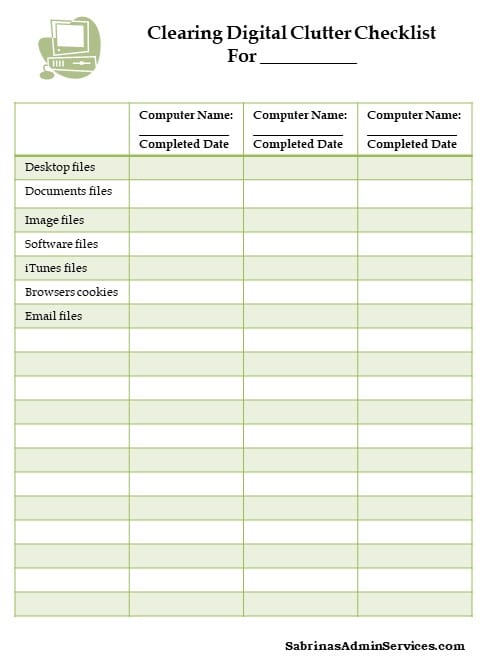
Decluttering solopreneur digital files at least once a quarter is best, but if you do not have the time, once a year will work, too. If you have more than one computer or online account, you may need to do these tasks multiple times. The checklist below shows you how to do a checklist for multiple computers.
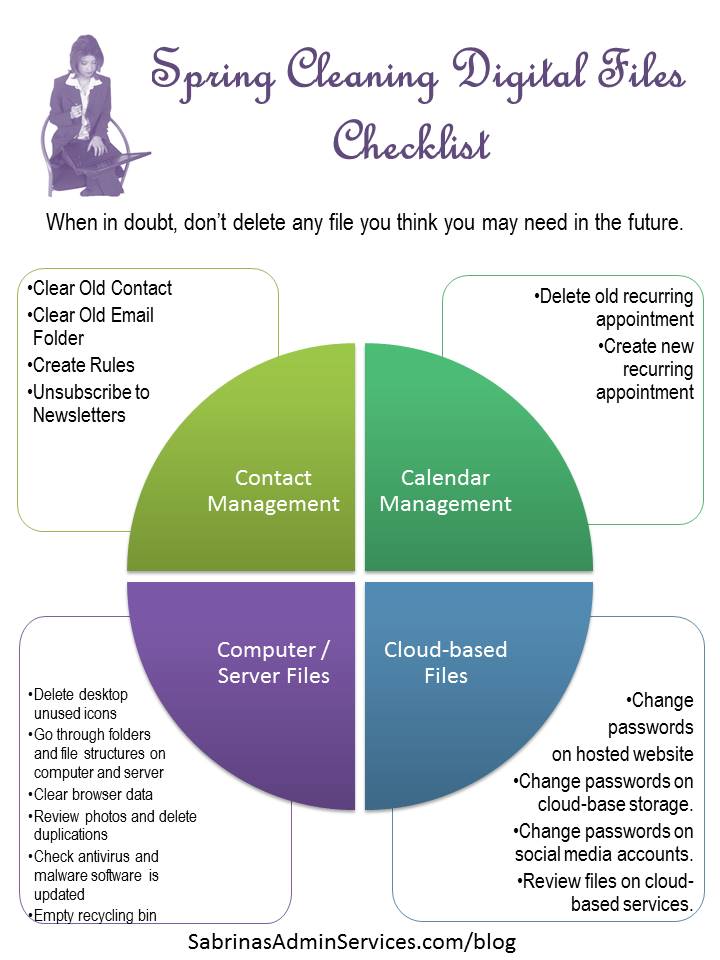
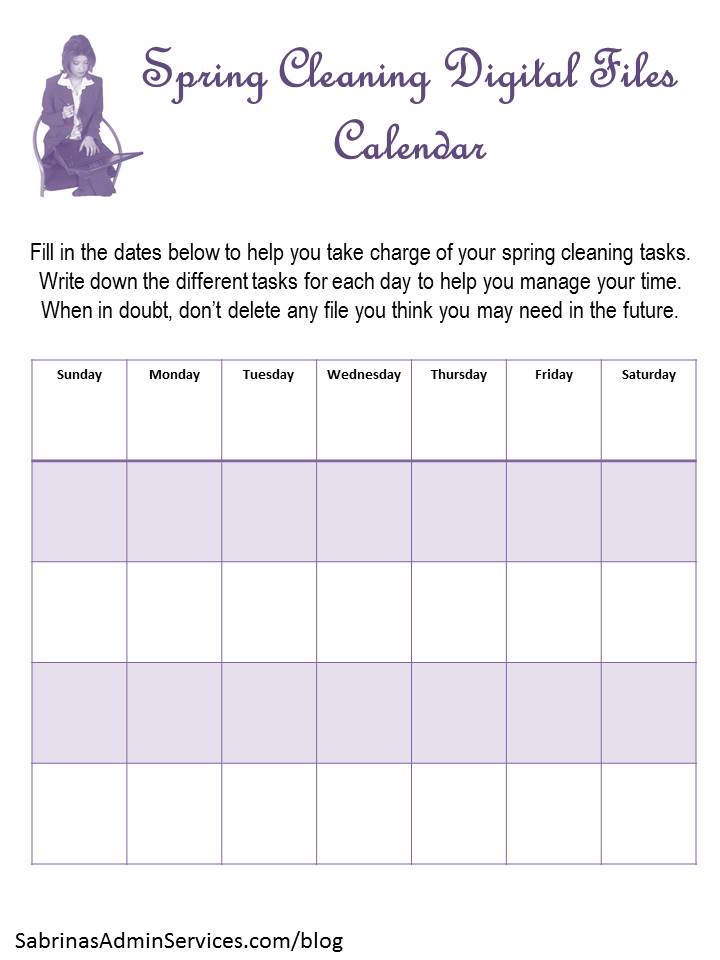
The two pages below show you how to create a spring cleaning digital files checklist. For more details, visit the post here and get the free printable with several pages to help you organize your time.
The best time to review the digital files is in the evening or on weekends. You can do this while watching TV or listening to music. Spend a few hours at a time doing it. That way, you will feel you have completed a significant amount of it.
FAQs
It depends on how much you’ve accumulated, but most solopreneurs can get through one area (like photos or email) in under an hour. Tackling one category at a time makes the whole project feel manageable.
Both work — AI tools save time on repetitive sorting, but manual review is still worth it for sentimental photos or sensitive documents where you want full control.
Start with whatever is causing you the most frustration right now. If you can never find an email, start there. If your phone storage is full, start with photos.
Yes, as long as you’ve confirmed you don’t need them for taxes, contracts, or ongoing projects. When in doubt, move a file to an archive folder instead of deleting it outright.
At least once a quarter. If you have multiple devices or accounts, a lighter monthly pass can keep things from piling up again.
Every device that syncs to the same accounts. Deleting an app or photo on one device doesn’t always remove it from another unless they’re linked.
Unused apps. It takes just a few minutes and immediately frees up storage space on your phone or computer.
Conclusion
Taking the time to clear the digital clutter will help you feel more in control of your electronic content, save you money on storage costs, and save you headaches when looking for something important. I hope this post inspires you to do this task for yourself and your business. Please leave a comment below to let me know how it goes. I would love to hear from you.
Here are some more posts to help you with your digital clutter. Feel free to visit them.