Protecting your clients (affiliate)’ files should be a top priority if you have a home office in a common area or a designated office in your home. It would help if you took extra precautions to help protect your clients (affiliate)’ private information. They trust you to keep their information confidential and expect no less.
Whether you handle bookkeeping records, tax documents, medical information, or business contracts, a single data breach or unauthorized access could damage your reputation and expose you to legal liability. The good news is that most home office security improvements are affordable and easy to implement.
To help you set up a more secure Solopreneur Home Office, I am discussing my favorite ways to improve the safety of your home office and client files (affiliate).
Topics
- Use locks.
- Use a sturdy, metal, fireproof safe for your client’s files.
- Keep Your Home Office Antivirus and Spyware Software Up to Date
- Log out of a client’s file or website at the end of the session.
- Buy or subscribe to a security system.
- Have a backup procedure.
- Encrypt client files containing valuable information.
- Use a laptop lock.
- Keep the computer strictly for business use.
- Ensure your wifi is secure.
- Bonus: Make sure your mobile devices are secure, too!
- Final Thoughts
Key Takeaways
- Protect client files (affiliate) by enhancing home office security with locks and fireproof (affiliate) safes.
- Use paid antivirus and spyware software to ensure comprehensive protection against threats.
- Regularly log out of client accounts and keep the business computer strictly for work purposes.
- Implement a backup procedure following the 3-2-1 rule to safeguard important files.
- Encrypt sensitive client files (affiliate) and maintain secure WiFi to protect data from unauthorized access.
Use locks.
You can buy a few locks to add to your home office. They are cheap, and you can purchase padlocks with several locks and one key. Lock up any cabinet with client files, checkbooks, pre-printed deposit slips, or thumb drives.
Types of Locks to Consider
Keyed padlocks (affiliate)– Ideal for filing cabinets and storage bins. Look for padlock sets that use a single master key so you don’t end up juggling a dozen different keys.
Combination locks(affiliate) – No key to lose. Choose a four-digit combination for better security than the standard three-digit option.
Drawer locks (affiliate) – Small, aftermarket drawer locks can be added to most desk (affiliate) drawers with just a screwdriver. They’re perfect for locking away a checkbook or external hard drive at the end of the day.
Door locks(affiliate) – If your home office has its own door, consider adding a keyed deadbolt or keypad lock. This is especially important if your office is in a room that guests or children frequently access.
Quick Tip
Label each key on your keyring with a small colored tag so you can grab the right one quickly. If you use combination locks, store the combinations in a password manager rather than on a sticky note.
Filing Cabinet with Lock Option
 Buy Now →
 (affiliate)
Use a sturdy, metal, fireproof safe for your client’s files.
Using a fireproof (affiliate) safe (affiliate) for your business files will protect you in the event of a fire. Some are small, some are large, some have filing cabinets, and others have just a cabinet to store things. Pick the best one that works for you and your client’s files.
What to Look for in a Safe
Fire rating – Look for safes rated to withstand at least one hour of fire exposure at 1,700°F. UL (Underwriters Laboratories) rated safes are the gold standard.
Water resistance – A safe (affiliate) that survives a fire but lets water damage seep in won’t do you much good. Check for waterproof seals, especially if your office is in a basement or on the ground floor.
Size and capacity – Think about what you’ll store. If it’s mostly paper files, a compact document safe (affiliate) will do. If you also need to protect external drives, a laptop, or cash, go bigger.
Lock type – Digital keypads are convenient, but make sure the model includes a backup key in case the batteries die. Biometric (fingerprint) locks offer fast access without memorizing a code.
Quick Tip
Keep a fireproof (affiliate) document bag inside your safe for an extra layer of protection. These are inexpensive and give you a grab-and-go option during an emergency evacuation.
Fireproof Document Box Option
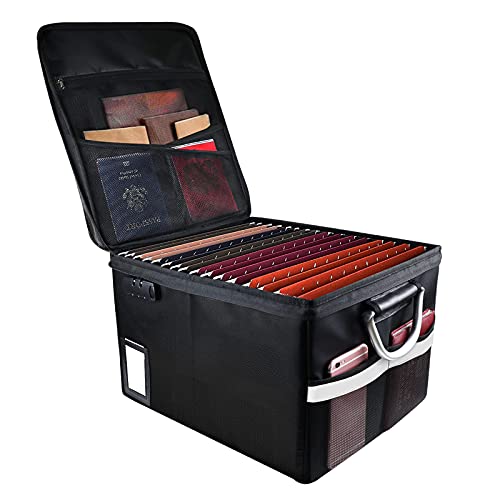
Fireproof Document File Organizer Box with lock
Buy Now →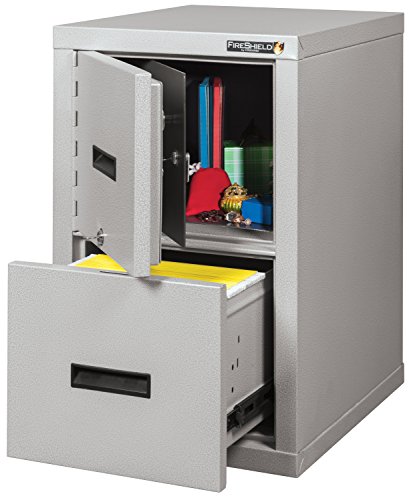
Filing Cabinet Fire Resistant – Light Weight, fire Rated, One File Drawer & Safe
Buy Now →(affiliate)
Keep Your Home Office Antivirus and Spyware Software Up to Date
Use high-quality software that you pay to keep up to date annually. Keep your settings on a more secure setting to ensure you take the best precaution. Make sure all your apps are updated regularly.
Why Free Antivirus Isn’t Enough for Business
Free antivirus programs offer basic protection, but paid business-grade software typically includes real-time ransomware protection, phishing email filters, firewall management, and priority customer support. When client data is on the line, the annual subscription fee is a smart investment.
Best Practices for Staying Protected
Enable automatic updates – Don’t rely on remembering to click “Update Now.” Schedule updates to run overnight or during off-hours so they don’t interrupt your workflow.
Run scheduled scans – Set your antivirus to perform a full system scan at least once a week, ideally when you’re not actively working.
Update your operating system – Windows, macOS, and Linux all release regular security patches. Turn on automatic OS updates as well.
Update browser extensions – Outdated extensions are a common entry point for malware. Remove any extensions you no longer use and keep the rest up to date.
Don’t ignore update notifications – Those pop-ups for Adobe, Java, Zoom, and other apps often contain critical security fixes.
Here’s a post I wrote on the topic, which includes a free checklist: 12 Important Updates to Do to Keep Your Business Secure
The content you love. The privacy you need.
Keep your online activity safer and more private. Annual plans come with a 60-day money-back guarantee.

Log out of a client’s file or website at the end of the session.
When you finish your clients (affiliate)’ material, log out and close it. This not only keeps it safe but also keeps you focused on the next project.
Why Logging Out Matters More Than You Think
Staying logged into client accounts—especially financial platforms, email accounts, and cloud storage—leaves an open door. If someone else uses your computer, picks up your unlocked phone, or if your device is compromised by malware, that open session gives instant access to sensitive data.
Make It a Habit
Log out of every client portal, bank account, and cloud platform when you finish a task—even if you’re planning to return to it later that day.
Close all browser tabs (affiliate) related to the client. Tabs (affiliate) left open can auto-refresh and stay authenticated.
Clear your browser’s saved passwords for client accounts. Use a password manager instead, which requires you to authenticate before auto-filling credentials.
Set a screen lock timer – Configure your computer to lock automatically after 3–5 minutes of inactivity. This acts as a safety net if you forget to log out or step away unexpectedly.
Use separate browser profiles – Create a dedicated browser profile for client work. When you close that profile window, all sessions end automatically.
Buy or subscribe to a security system.
Having a home security system with 24-hour monitoring for your home office adds serious peace of mind, both for you and your clients. When you are not home, your security system will add a layer of protection for your business equipment and client files.
Types of Security Systems to Consider
Professional monitoring – Companies like ADT and SimpliSafe offer 24/7 professional monitoring. If an alarm triggers, they contact you and dispatch emergency services if needed.
DIY systems – Ring (affiliate), Wyze(affiliate), and similar brands let you set up cameras, door sensors, and motion detectors yourself. You can monitor (affiliate) alerts on your phone and usually add professional monitoring for a small monthly fee.
Smart cameras – A simple indoor camera pointed at your office area can record activity while you’re away. Look for models with motion-activated recording and cloud storage.
Door and window sensors – These alert you if someone opens your office door or window. They’re inexpensive and easy to install on any door frame.
Tax Deduction Bonus
If you use a portion of your home exclusively for business, you may be able to deduct a percentage of your security system costs on your business taxes. Consult your accountant or tax advisor for specifics on the home office deduction. Feel free to check out my post below on home office deductions.
How to Create a Home Office and Business Deductions Organizer
As a small business owner, you probably have many deductions for your business. But are you taking all the deductions?
Home Office Security Options

Ring Alarm 14-Piece Kit (newest model)
Buy Now → Buy Now →
 (affiliate)
Here are some home security systems: SimpliSafe, ADT, and Ring).
Have a backup procedure.
Setting up a backup process will help you in emergencies. To be safe, have backups of your files in at least three different locations. The original file is on your computer, the second is on an external drive, and the third is given to the client. If you wish to also put backup data in the cloud, that’s fine—but make sure there is another place you can access it.
The 3-2-1 Backup Rule
IT professionals recommend the 3-2-1 backup rule: keep three copies of your data on two different media types, with one copy stored off-site. For a home office, this might look like:
- Original files on your computer’s hard drive.
- A copy on an external hard drive or NAS (Network Attached Storage) device kept in your home.
- A copy in the cloud (Google Drive, Dropbox, Backblaze) or on a drive stored at a separate physical location.
Automate Your Backups
The best backup is the one you don’t have to remember. Use software like Windows Backup, Time Machine (Mac), or a third-party tool like Backblaze or Carbonite to schedule automatic backups daily or weekly. Set it and forget it.
Feel free to check out our post about how to set up a backup process.
External Hard Drive Option

Seagate Portable 2TB External Hard Drive HDD
Buy Now →(affiliate)
Encrypt client files containing valuable information.
If you work on or reference data daily, weekly, or monthly, encrypting it will provide more protection. I don’t recommend keeping the client’s private files on cloud servers.
What Is Encryption and Why Does It Matter?
Encryption scrambles your files so that only someone with the correct password or key can read them. Even if a thief steals your laptop or an external drive, encrypted files are unreadable without the password. Think of it as a digital deadbolt on every file.
Easy Ways to Encrypt
Windows BitLocker – Built into Windows Pro and Enterprise editions. You can encrypt your entire hard drive or specific folders. It runs in the background and doesn’t noticeably slow down your computer.
macOS FileVault – Apple (affiliate)’s built-in encryption tool. Turn it on in System Settings > Privacy & Security, and your entire drive is encrypted automatically.
VeraCrypt – A free, open-source option that works on Windows, Mac, and Linux. You can create encrypted containers (virtual locked folders) for specific client files.
Cloud encryption – If you share files in the cloud, be sure to enable encryption. Each online cloud storage provider has its own settings. It should be on by default, but double-check yours.
USB drive encryption – If you transport files on a thumb drive, use an encrypted USB drive or encrypt the files before copying them over.
If you share files on the cloud, be sure you have activated the encryption option. Each online cloud storage has its own. It should be on. But if not, you will need to do your own research to find it. Read more about being safe when on the go.
Hardware-Encrypted External Drive Option

Hardware Encrypted 2TB Aegis Padlock USB 3.0 256-Bit AES XTS Portable External Hard Drive
Buy Now →(affiliate)
Use a laptop lock.

A laptop lock is a great option for keeping your computer secure, in case others come to your home office when you are not there. This may sound silly, but if people go in and out of your home often, this will give you peace of mind.
How Laptop Locks Work
Most modern laptops (affiliate) have a small security slot (called a Kensington lock slot (affiliate)) on the side. A laptop lock cable threads through this slot and attaches to your desk (affiliate), table leg, or another fixed object. It works like a bicycle lock for your computer.
Choosing the Right Laptop Lock
Keyed locks (affiliate)– Simple and reliable. Just make sure you store the spare key somewhere safe.
Combination locks (affiliate) – No key to lose, and you can share the combination with a trusted colleague if needed.
Adhesive anchor plates (affiliate) – If your laptop doesn’t have a security slot, these attach to the back and provide a loop for a lock cable.
Additional Physical Security
You can also store the laptop in a locked drawer or cabinet when your business is closed for the day. Out of sight, out of mind—and out of reach.
Keep the computer strictly for business use.
Don’t allow others to use the computer. Have a cheap computer for the kids and other people to use. What’s great about doing this is that you can log out and shut down the computer when your business is closed. It will make you feel like you have left work.
Why a Dedicated Business Computer Is So Important
When family members or guests use your work computer, they can accidentally download malware, visit unsafe websites, change settings, or stumble upon client files. Even well-meaning use creates risk. A dedicated business machine keeps your professional data isolated.
Tips for Keeping It Separate
Power it down at the end of the day – Shutting down your business computer creates a clear mental boundary between work and personal time. It also forces any pending updates to install.
Create a separate user account – If buying a second computer isn’t an option right now, at minimum, create a separate password-protected administrator account for your business work and a standard (limited) account for personal or family use.
Don’t install personal apps – Keep games, social media apps, and streaming services off your business computer. Every additional app is a potential security vulnerability.
Set clear boundaries – Let family members know that the business computer is off-limits. If kids need a computer for homework, a refurbished Chromebook (affiliate) is an affordable alternative.
Privacy Laptop Screen Filter Option

Laptop Privacy Screen 14 Inch 16:9 – Patented Removable Laptop Privacy Filter Shield and Protector
Buy Now →(affiliate)
Ensure your wifi is secure.
Checking your home wifi is key to keeping your home office private. Is your wifi visible to others? Check out your particular wifi and determine how to make it invisible to others. Visit your provider’s website support page for information on how to make your Wi-Fi more secure.
Steps to Secure Your Home WiFi
- Change the default router password – Most routers ship with a generic username and password (like admin/admin). Change it immediately to something strong and unique.
- Use WPA3 encryption – If your router supports it, enable WPA3. If not, WPA2 is the minimum acceptable standard. Never use WEP—it’s outdated and easily cracked.
- Hide your network name (SSID) – You can configure your router to stop broadcasting its name. You’ll still be able to connect by manually entering the network name on your devices.
- Create a guest network – Most modern routers let you set up a separate guest network. Give visitors access to the guest network and keep your business devices on the main network, completely isolated.
- Update your router firmware – Router manufacturers release firmware updates to fix security vulnerabilities. Check for updates every few months or enable auto-update if available.
- Use a strong WiFi password – Your WiFi password should be at least 12 characters and include a mix of uppercase letters, lowercase letters, numbers, and special characters.
Bonus: Make sure your mobile devices are secure, too!
And don’t forget your mobile security when you are on the go. Your smartphone likely has access to the same email, cloud storage, and client portals as your desktop—so it needs the same level of protection.
Mobile Security Essentials
- Use a strong screen lock – A six-digit PIN is the minimum. Biometric options (fingerprint or face recognition) are even better for quick, secure access.
- Enable remote wipe – Both iPhone (Find My iPhone) and Android (Find My Device) let you remotely erase your phone if it’s lost or stolen. Enable this feature before you need it.
- Install a VPN – A VPN (Virtual Private Network) encrypts your internet connection, especially important when using public WiFi at coffee (affiliate) shops, airports, or co-working spaces. Check if your phone already has one built in, or purchase an app like Norton (affiliate) VPN.
- Be cautious with app permissions – Review which apps have access to your camera, microphone, contacts, and location. Revoke permissions for any app that doesn’t need them.
- Keep your phone’s operating system up to date – iOS and Android updates frequently include important security patches. Don’t put off those update notifications.
- Avoid public charging stations – Public USB charging ports can be compromised to steal data (“juice jacking”). Use your own wall charger or a portable battery pack instead.
Visit my updated 2026 posts on Mobile Security Tips.
Below are some additional questions and answers you may be wondering about.
Frequently Asked Questions
Why is home office security important for solopreneurs and small business owners?
Home office security is important because you are responsible for protecting your clients’ confidential information, including financial records, tax documents, and personal data. A data breach or unauthorized access can damage your professional reputation, break client trust, and expose you to legal liability. Taking basic security steps shows clients that you treat their privacy seriously.
What type of lock is best for securing a home office filing cabinet?
Keyed padlock sets that use a single master key are a popular and affordable choice for filing cabinets. They let you lock multiple cabinets and drawers without carrying a different key for each one. Aftermarket drawer locks that install with a screwdriver are another good option for desk (affiliate) drawers. If your home office has its own door, adding a keyed deadbolt or keypad lock provides an extra layer of protection.
What should I look for when buying a fireproof safe for client files?
Look for a safe with at least a one-hour fire rating at 1,700°F and a UL (Underwriters Laboratories) certification. Water resistance is also important, since firefighting efforts can cause water damage. Consider the size you need based on whether you are storing paper files, external drives, a laptop, or cash. A bolt-down option and a digital keypad with a backup key are helpful features to look for.
Is free antivirus software good enough for a home-based business?
Free antivirus programs provide basic protection, but they typically lack features that business owners need, such as real-time ransomware protection, phishing email filters, firewall management, and priority customer support. When you are handling client data, paid business-grade antivirus software is a smarter investment because it offers more comprehensive protection.
Why should I log out of client accounts after every session?
Staying logged into client accounts, especially financial platforms, email, and cloud storage, leaves an open door to sensitive data. If someone else uses your computer, picks up your unlocked phone, or your device is compromised by malware, that active session gives instant access. Logging out after each task is a simple habit that significantly reduces your risk.
Can I deduct a home security system on my business taxes?
If you use a portion of your home exclusively for business, you may be able to deduct a percentage of your security system costs as part of the home office deduction. The exact amount depends on your situation, so it is best to consult your accountant or tax advisor for guidance specific to your business.
What is the 3-2-1 backup rule?
The 3-2-1 backup rule means keeping three copies of your data, on two different types of media, with one copy stored off-site. For a home office, this could mean the original files on your computer, a second copy on an external hard drive at home, and a third copy in the cloud or on a drive kept at a separate physical location. This approach protects you against hardware failure, theft, and natural disasters.
What is the easiest way to encrypt client files on my computer?
The easiest way depends on your operating system. Windows Pro and Enterprise users can turn on BitLocker, which encrypts the entire hard drive in the background. Mac users can enable FileVault in System Settings under Privacy and Security. For a free cross-platform option, VeraCrypt lets you create encrypted containers for specific client folders. If you use cloud storage, check that encryption is enabled in your provider’s settings.
Do I really need a laptop lock for my home office?
If people come in and out of your home regularly, such as family members, friends, repair workers, or cleaning services, a laptop lock is a worthwhile precaution. It secures your computer to a fixed object like a desk and prevents someone from walking off with it. You can also store your laptop in a locked drawer or cabinet when you are not working.
How can I make my home WiFi more secure for business use?
Start by changing the default router password to something strong and unique. Enable WPA3 encryption if your router supports it, or WPA2 at minimum. Hide your network name so it is not visible to neighbors. Set up a separate guest network for visitors so your business devices stay isolated. Update your router firmware regularly and use a WiFi password that is at least 12 characters long with a mix of letters, numbers, and special characters.
What mobile security steps should I take as a solopreneur?
Use a strong screen lock with at least a six-digit PIN or biometric authentication. Enable remote wipe through Find My iPhone or Find My Device so you can erase your phone if it is lost or stolen. Install a VPN to protect your connection on public WiFi. Review and limit app permissions, keep your operating system up to date, and avoid using public USB charging stations to prevent data theft.
Should I let my family use my business computer?
It is best to keep your business computer strictly for work. When family members use it, they may accidentally download malware, visit unsafe websites, change settings, or access client files. If a second computer is not in the budget, create a separate password-protected user account with limited permissions for personal or family use. A refurbished Chromebook is also an affordable option for kids and general household use.
Final Thoughts
By showing your clients that you have protected their privacy, you will earn their trust and make them more willing to work with you. You don’t have to implement all ten of these steps at once—start with the ones that address your biggest vulnerabilities and build from there. Even small improvements add up to significantly better security over time.
What other safety steps do you take to make your home office safer? Please leave a comment below. I would love to hear from you.
Struggling to get your home more secure? Contact me, and we can set up a plan. Check out my small business and solopreneur-focused virtual consultation service!
Looking for even more information on this topic.
Affiliate Disclosure: Please note that these are affiliate links through Amazon (affiliate), and at no additional cost to you, I will earn an affiliate fee if you decide to make a purchase.









These are helpful tips for everyone, beyond business clients!
Fortunately, I have very little client information. Mostly their contact info and copies of the signed contracts. I have digital files that are backed up. I have been thinking about a VPN for our family’s use.
Smart reminder to sign out if you are working on a client’s computer or accessing their computer virtually. It’s easy to forget to do that!
Thanks, Seana. This information is for anyone who works in a service based business. We tend to forget that we do have access to private information from clients and we need to be respectful of their information as well as our own. Thanks for stopping by and joining in the conversation. I really appreciate it.
This is such a comprehensive list, and includes quite a few things many of us would never think of until something bad happened… Very valuable information!
Thanks, Janet. I hope it helps everyone keep their clients’ and their information safe.
Buying my own computer was the very first step I took when preparing to start my own business! Not just for privacy and security (which are super important) but to ensure that I always had access to it when I needed it!