I was checking my storage area and realized I hadn’t revisited my old papers in a while, so I went through the old bins and started shredding a lot of papers. Paper doesn’t take up much room, so I can easily set it aside and let it collect dust. But this is not necessary. The IRS doesn’t need us to keep every single piece of paper that ever crossed our desks.
As small business owners, we need to be more conservative about getting rid of the paper, but we don’t have to keep every single piece. The IRS suggests keeping the papers for 3 years if you have a small business, but I prefer to keep them for 7 years, just in case. For more detailed information from the IRS, check out their website: How Long To Keep Records.
Key Takeaways
- Small business owners must shred sensitive documents to comply with laws like FACTA and HIPAA.
- Conduct regular digital audits to delete unnecessary backups of sensitive documents stored on devices.
- Use the three-box method to simplify shredding processes and reduce decision fatigue.
- Keep certain business documents longer than the IRS requires, such as formation documents and year-end payroll summaries.
- Choose the right shredder; cross-cut (affiliate) or micro-cut (affiliate) options are ideal for protecting sensitive information.
Topics
- Does my small business have to shred documents and papers?
- The Hidden Liability of Digital Photos of Old Documents
- The “Pre-Shred System” That Eliminates Decision Fatigue
- Strategic Shredding: What to Keep Longer Than the IRS Requires
- Shred Important Small Business and Personal Paper
- What shredder to buy?
- Buy Shredder: micro-cut and cross-cut
- How often should I shred?
- FAQs
Does my small business have to shred documents and papers?
YES! It’s the law and your responsibility as business owners. Just because you may be a one-person small business doesn’t mean you are exempt. You must shred any of the following documents and any papers related to the Fair and Accurate Credit Transaction Act (FACTA) and the Health Insurance Portability and Accountability Act (HIPAA). Making this a regular practice protects everyone involved, from clients (affiliate) to associates.
Legal Shredding Requirements by Document Category
Below are the document categories, the governing law, and who must comply.
| Document Category | Governing Law | Who Must Comply |
| Credit card receipts, applications, credit reports | FACTA | All businesses handling consumer credit information |
| Medical records, insurance claims, health information | HIPAA | Healthcare providers and businesses with employee health records |
| Employee personal data, background checks, I-9 forms | Various federal and state labor laws | All employers, including single-employee businesses |
| Customer personal information, transaction records | FTC privacy regulations | Any business collecting customer data |
The Hidden Liability of Digital Photos of Old Documents
Most small business owners focus solely on physical paper shredding, but rarely consider the digital trail they’ve created. If you’ve ever photographed a document “just to have a backup” before filing it away, you may have unintentionally created a security vulnerability that bypasses all your physical shredding efforts.
Digital Document Remnants to Purge:
Below are digital documents you may also need to get rid of.
- Photos in your phone’s camera roll of checks, tax forms, or ID documents
- Email attachments containing sensitive financial information older than your retention period
- Cloud storage folders with scanned copies of documents you’ve already physically shredded
- Text messages where you shared account numbers or personal details
- Digital wallet apps storing expired credit card images
The Critical Gap:
When you shred a physical bank statement from 2016 but still have a smartphone photo of it from when you were “organizing,” you haven’t actually eliminated the risk—you’ve just relocated it to a device that’s far more vulnerable to hacking, loss, or theft.
Action to Take:
Before your annual shredding session, conduct a parallel digital audit using your phone’s search function for terms like “statement,” “receipt,” “check,” or “tax.”
Delete these images permanently, then empty your “Recently Deleted” folder.
For cloud storage, use the same retention timeline you apply to physical documents. It may be stored up to 30 days after you delete it on some devices and Google Drive.
The “Pre-Shred System” That Eliminates Decision Fatigue
Most people avoid shredding not because of the shredding itself, but because of the exhausting mental work of deciding what to shred. A pre-shred staging system removes this barrier and turns shredding from a dreaded project into a simple execution task.
The Three-Box Method:
Box 1: “Shred on Sight”
Items that never require review: pre-approved credit offers, address labels (affiliate), expired cards. These go directly into this box as soon as they arrive. No decision needed.
Box 2: “Review Next Tax Season”
Current-year financial documents you might need for tax preparation. Once taxes are filed and accepted, move the entire box to evaluation, which means storing it for the 7-year period.
Box 3: “Archive with Expiration Date”
Documents with specific retention requirements. Write the shred date directly on the box lid in permanent marker: “Shred After: April 2028.” When that date arrives, shred the entire box without opening it.
The Implementation Key:
Label each box clearly and position Box 1 in your primary work area where mail gets opened. The physical proximity eliminates the “I’ll deal with it later” pile that becomes an overwhelming backlog.
You can store Box 2 and Box 3 in your filing area since you access them less often.
This system works because it separates decision-making from shredding, letting you make decisions once when you create the system rather than hundreds of times when you face a pile of old papers.
Strategic Shredding: What to Keep Longer Than the IRS Requires
While the IRS provides minimum retention guidelines, certain documents need to be kept longer for reasons unrelated to tax compliance, and knowing which ones can save you thousands in reconstruction costs or protect you in unexpected legal situations.
Documents Worth Extended Retention (10+ Years)
Below are documents to keep for over 10 years.
Business Formation Documents
Articles of incorporation, operating agreements, and initial capital contribution records. These prove ownership structure and can be critical if partnership disputes arise years later.
Property and Asset Purchase Records
Original purchase documents for business property, equipment, or vehicles—even after sale. Capital gains calculations may require proof of original basis decades later, and insurance claims for replacements often need historical value documentation.
Year-End Payroll Summaries
While you can shred individual pay stubs after verifying your annual W-2, keep year-end payroll summaries permanently. They’re essential for Social Security earnings disputes and pension calculations that may not surface until retirement.
Contracts That Create Ongoing Obligations
Even expired contracts for leases, vendor agreements, or client services should be retained beyond the standard period if they contain non-compete clauses, intellectual property assignments, or indemnification provisions that survive contract termination.
Why This Matters:
Reconstructing historical financial records from third parties typically costs $500 to $2,000 per year of records, if they’re even recoverable. Storing an extra file box costs approximately $3 per year in physical space. The return on investment for selective extended retention is substantial when unexpected needs arise.
Shred Important Small Business and Personal Paper
Below is a list of papers and documents that are more sensitive and that must be shredded when you are ready:
Bank Receipts to Shred
- ATM receipts/Bank Statements – old, expired cards. Closed accounts should be shredded too.
- Canceled and Voided Checks – Shred any canceled and voided checks, especially if you have check images on your bank statements.
Credit Card Papers to Shred
- Credit Report – older copies of the credit report. Only keep the current copy for your records.
- Pre-approved Credit Card Applications – Shred any pre-approved credit card applications you get, especially if you don’t want them.
Financial Document Retention Timeline
Review the document types below, the minimum number of years you must keep them for your business, and when to shred them.
| Document Type | Minimum Retention | When to Shred |
| ATM receipts | Until reconciled with statement | After monthly statement verification |
| Bank statements | 3-7 years | After retention period if no tax relevance |
| Canceled checks (non-tax) | 1 year | After annual reconciliation is complete |
| Canceled checks (tax-related) | 7 years | After IRS audit period expires |
| Voided checks | Immediate | As soon as properly voided |
Other Documents to Shred
Medical and Dental Records – Any old records of your family and friends.
Legal Documents – Any old contracts or legal records you no longer use.
Investment Stock Transactions / Investment statements – You can keep the end-of-year summary transactions, but you can shred the rest of the year. Also, if you can access accounts online, you don’t need to keep paper copies. Check your bank statement online first before shredding any papers.
Employee Records – Wait a year or two after a person leaves the company before shredding any paperwork that contains employee information.
Paystubs for Employees – After you get the last statement of the year and it is OK, you can shred the rest of the pay stubs.
Employee document shredding schedule
Below are the employee documents, how long you need to keep them, and the appropriate shredding priority.
| Employee Document | Retention After Termination | Shredding Priority |
| Pay stubs and payroll records | 3 years minimum | High – contains SSN and bank details |
| I-9 employment eligibility forms | 3 years after hire or 1 year after termination | Critical – identity theft risk |
| Benefits enrollment forms | 6 years after termination | High – medical and dependent info |
| Performance reviews | 2 years after termination | Medium – protects against lawsuits |
In addition to the list above, below are other papers and documents you should shred to protect your personal life as well:
- Address labels (affiliate) from junk mail and magazines
- Pre-approved credit card applications
- Birth certificate copies
- Personal canceled and voided checks
- Credit card bills
- Documents with your previous name on them
- Papers with the old address, phone numbers, and email addresses on them
- Papers with PINs on them
- Old Driver’s licenses and anything with your driver’s license number on it
- Expired passports and visas – keep the most recent expired passport just in case your valid one gets lost or stolen
- Old IDs like college IDs, state IDs, employee ID badges, military IDs
- Old Legal documents
- Any document with a signature – leases, loans, contracts, letters
- Unused luggage tags
- Documents with Social Security numbers on them
- Report cards
- Resumes
- Tax returns and documents/letters
- Used Travel details
- Used Airline tickets
- Utility bills – telephone, gas, electric, water, internet, cell phone

What shredder to buy?
There are lots of shredders on the market. Straight-cut ones are usually less expensive because they’re less secure. A larger and faster shredder works best. Look for ones that shred 20 pages at once.
I prefer the larger freestanding cross-cut (affiliate) or micro-cut (affiliate) ones. I can shred the entire junk mail envelope (affiliate) in it and don’t have to separate the pages that just get recycled and those that get shredded.
Buy Shredder: micro-cut and cross-cut

Micro-cut shredders, Micro-cut
Buy Now →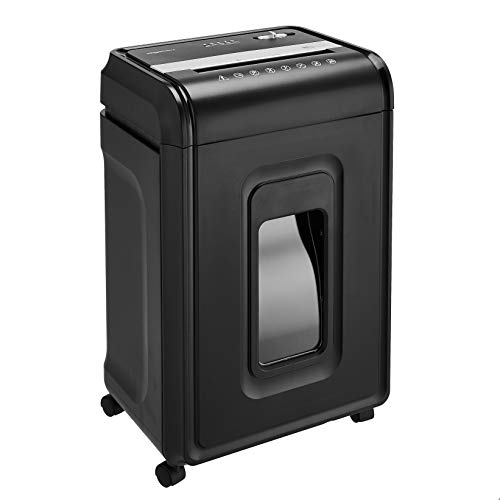
Cross-Cut Shredders, cross-cut
Buy Now →(affiliate)
Shredder security levels comparison
Below are the shredder types for your business. As said above, a cross-cut (affiliate), micro-cut (affiliate), or high-security micro-cut is the best option to protect your business.
| Shredder Type | Particle Size | Best For |
| Straight-cut (strip-cut) DON’T USE FOR PRIVATE INFORMATION | 1/4″ strips | Non-sensitive documents, junk mail without personal info |
| Cross-cut | 1/4″ x 2″ pieces | Financial documents, standard business records |
| Micro-cut | 1/16″ x 5/16″ pieces | Highly sensitive data, medical records, legal documents |
| High-security micro-cut | Less than 1/32″ particles | Classified information, proprietary data |
How often should I shred?
Once a year, after you submit your taxes, is a great time to shred old tax documents. This helps you save space and reuse boxes you’ve already stored away. You can pick whatever time works for you to shred these items. Below are some options to consider.
Annual Shredding Calendar for Small Businesses
| Time of Year | What to Shred | Why This Timing |
| April-May (post-tax filing) | Documents 7+ years old, expired business records | Safe (affiliate) to destroy after the tax deadline passes |
| July (mid-year) | First half pay stubs after verification | Prevents accumulation of sensitive documents |
| December (year-end) | Outdated client files (affiliate), closed project documents | Clean slate for new year record-keeping |
| Ongoing (monthly) | Junk mail, pre-approved offers, receipts | Prevents identity theft from easily accessible documents |
I hope this helps you get rid of old papers; let’s take a poll.
FAQs
Tearing documents by hand does not provide adequate security for sensitive information. Even torn pieces can be reassembled by identity thieves, and most hand-torn documents leave account numbers, names, and addresses largely intact.
For any document containing personal identifiers, financial information, or business data, proper shredding is necessary to meet legal compliance standards and protect against fraud.
Most shredded paper can be recycled in standard recycling bins, but check local recycling guidelines, as some facilities restrict cross-cut or micro-cut shredded paper.
For highly sensitive documents, consider using shredded paper as packing material or composting it if the paper contains no plastic windows or glossy coating.
Some businesses use shredding services that provide certificates of destruction for compliance documentation.
Reputable shredding services are generally safe and provide certificates of destruction for your records, but you should verify they are NAID AAA certified, which indicates compliance with strict security standards. For ongoing document disposal, locked shredding bins picked up on regular schedules work well for most businesses.
However, shred extremely sensitive documents like passwords, safe combinations, or proprietary formulas on-site before they leave your control.
Most modern cross-cut and micro-cut shredders designed for business use can handle staples and small paper clips without issue, and removing them adds unnecessary time.
However, remove large binder clips, metal fasteners, and laminated documents, as they can damage the shredder. Always check your specific shredder’s manual, as personal-use shredders often require staple removal while commercial-grade models do not.
Prevention is best, since reassembling shredded documents is nearly impossible with cross-cut or micro-cut shredding. Set a review period where documents marked for shredding sit in a separate container for 30 days before destruction.
For critical business documents, create digital scans before shredding and store them securely with proper backup procedures. If you do accidentally shred something irreplaceable, contact the original issuer immediately to request duplicate copies, though this may involve fees and processing time.
Visit our other shredding posts below.
Ways to Dispose of Physical and Digital Files
How Long Should I Keep Business Records
7 Earth Day Activities For Your Small Business
Now it is your turn! How often do you shred your documents? How many years of documents do you keep? Please share it below. Thank you.
Below are related posts!









I would love to have a shredder and will probably invest in one sooner than later. Right now I rip things into tiny pieces. It’s a good thing I don’t have a lot to rip 😉
You didn’t leave much out in your list. So I guess it’s best to shred everything that has your signature and other personal information. I didn’t know the law required shredding certain documents. Thanks for the tips.
I think I really just need a super-duper shredder. I ponder over mail like pre-approved credit cards trying to separate the potentially damaging from the mundane – and then just shred the application, etc. All this is an effort to keep from shredding because my shredder is, I think, the first one ever made. Honestly, I believe there may be a tiny little Italian man in there with a single pair of shears cutting my documents by hand. It’s that fast. Then it gets jammed, and I have to sit down with the shredder’s top piece and a tweezers … if I moved up to a varsity-team shredder, it would probably pay for itself in cuts from my current Tylenol costs.
Hi Sabrina 🙂
Thanks for these awesome post on what needs to be shredded for business owners and for personal use as well! I have always wondered what needed to be shredded after a certain amount of time 🙂
Believe it or not, I actually DO have a shredder that is just sitting collecting dust lol 😉 Gonna be pulling that little tool right back out!
Now I have a list to refer back to when I need to know….Thank you 🙂
Thanks for offering clarity on this, because I never really knew all that “should” be shredded.
Fantastic list & great reminder topic. I see we all do some shredding but not in all the categories you listed & probably not as often.
I do need to schedule time to do more. TV commercial time is good.
Lots of shredding to be done! I try to stay on top of shredding / weeding out old docs, but it seems I’m in a losing battle. Thanks for including such a broad list of documents that should be shredded – good reminder for all of us.
Great list of items to shred. Until recently I never thought of shredding my airline tickets. Apparently, there is a lot of coded information about you on it. Guess, I better start updating my shredding practices. Thanks.
I don’t shred often enough…only when my files get stuffed. I appreciate hearing about how long the IRS wants you to keep business stuff, but when it comes to “old” personal records…how old is that? I have an old press pass that I just refuse to get rid of. It’s like a personal memento from my earlier life. And when I comes to resumes, I will not shred those. They live on my computer and the old versions have come in handy if I need a specific reference to a long-ago position or job duty that I need to use in current information.
Thanks for mentioning those pre-approved credit applications. One of my friends was turned down for a loan because of outstanding debt on a card she didn’t even have, because someone else obtained it in her name. Sadly, we really need to be cautious!
I have shredding days every now and then, Sabrina. Followed with chocolate as a reward for a hard day’s work. It is important to treat confidential materials with respect. Just ask anyone who has had their identity stolen.
This is very valuable information. So many people are the victims of identity theft and they only find out when it is too late (I usually see it when they are applying for a loan).
I try to shred as I go.. but when I do my annual taxes I cleanse extra papers… and luckily local banks have a shred day… I take advantage.. but great course.
Oh wow, I didn’t realise it was the law that you had to shred business documents. I wonder if the same rule applies in Australia? I’m going to check it out. Shredding is such a good idea anyway, even for personal documents and your list of what to shred is really helpful.
Definitely a good practice for sure. We don’t have a shredder but hubby makes a regular practice of burning – but probably not the safest choice.
The thing that made a difference to me to shred was getting a good, powerful one. When I had this little thing on my trash it was a pain and I never did it. Now, I shred all the time. Actually find the noise is a de-stressor for me. Those that you recommend look like they would be easy to use.
My “shredding” is actually me ripping all my old papers into shreds and I’ve been looking at shredders and there is quite a wide-range of prices and capabilities. I thought it was okay to just tear papers in fours and scramble them up in my recycling bin. Although I am getting rid of the right things, I think if I want to be “safer”, probably a shredder is a great idea. As I am in Canada, we have so many different models than you do in the U.S. And our prices are considerably higher too! Thanks for sharing, Sabrina. It is really info we all would be wise to take note of.
I have been shredding practically everything for years. Anything with so much as our name gets shredded.
Very helpful, Sabrina. I know I need to do this more often. I was really good at doing so for a long time, but have lapsed. Will get back to it–thanks for the kick in the rear to get me going!
WOW, I honestly had no idea. Frankly, I recycle most everything but don’t shred.